FatPirate Registration and KYC: Sign-Up, Verification and Documents
 Available in GB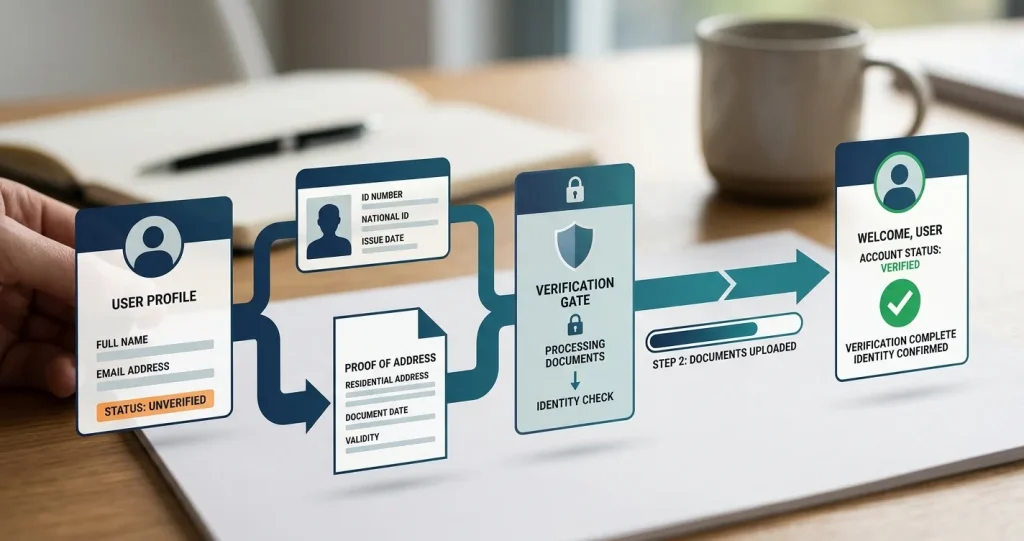
Account setup affects later withdrawals
FatPirate requires customers to be at least 18 and to register a personal account using true and complete information. Its current Terms allow identity, age, residence and source-of-funds checks both before and after deposits, and before or during a withdrawal. If documents are requested, the Terms list examples including certified identification, proof of residence and evidence that the payment method belongs to you. They also say documents are usually verified within 10 days after a request has been answered in full, although additional checks can take longer. For a UK user, the practical point is that registration is not just a sign-up step: inaccurate details, payment ownership questions or an incomplete KYC request can become a cashout problem later.
Table of Contents
- What should you prepare before registering?
- How the FatPirate account journey works in practice
- Which KYC documents can FatPirate request?
- How long can FatPirate verification take?
- Why KYC can become a withdrawal issue
- Account accuracy matters before the first deposit
- What responsible-gambling control is directly confirmed?
- Registration and KYC checklist before using real money
- What to prepare before opening and verifying a FatPirate account
- Is FatPirate Legit in the UK? Licence, Regulation and Trust Check
What should you prepare before registering?
Start with information you can keep consistent across the account, payment method and any later verification request. FatPirate’s Terms require an account to be registered in your own correct name, and they require the information supplied during registration to be true and complete. The same Terms also say account details should be kept up to date.
You should therefore expect to need accurate personal details rather than a disposable sign-up identity. Do not assume that a quick registration screen means the account will never be checked again. KYC can be triggered later, including around deposits or withdrawals.
The Terms also state that only one account is permitted per person and set wider duplicate-account restrictions around household or address, phone or email and IP. That makes consistency important before you fund the account, not just when you first create it.
For the overall UK assessment rather than the account-check process alone, the FatPirate review combines registration, payments, games, withdrawals and reputation.
How the FatPirate account journey works in practice
The account process is easiest to understand as three connected stages rather than a single registration form. First, you open a personal account and provide genuine details. Second, you use a payment route available to the account and keep the payment method in your own name. Third, FatPirate may ask for verification information when it needs to confirm identity, age, residence, payment ownership, source of funds or account activity.
That third stage can happen before or after a deposit and can also affect a withdrawal. The Terms explicitly allow KYC procedures around both sides of the money flow. This is why the payment methods and the withdrawal process matter even before the first deposit: the account details, payment owner and later cashout route should make sense together.
FatPirate does not promise that every player will follow an identical verification sequence. The exact checks can vary by account circumstances, so a sensible approach is to prepare for verification without assuming that every listed document will always be requested.
Which KYC documents can FatPirate request?
The current General Terms give concrete examples. FatPirate may request properly certified identification, proof of residence, proof that you own the payment methods used and transaction histories connected with those methods. Bank or credit and debit card statements are given as examples of payment evidence.
These are examples of information the operator says it may request, not a fixed checklist that every account must submit. The Terms also permit additional checks to verify identity, age, residence and other circumstances, including phone or face verification where required by its security and anti-fraud procedures.
| Check area | Examples named in the current Terms | Why it can matter |
|---|---|---|
| Identity | Properly certified ID | Confirms that the account belongs to the person using it |
| Residence | Proof of residence | Supports address and jurisdiction checks |
| Payment ownership | Proof of ownership of payment methods | Connects deposits and withdrawals to the account holder |
| Payment activity | Transaction histories, including bank or card statements | Can support payment and source-of-funds review |
If a request arrives, follow the wording of that specific request rather than sending unrelated documents. The Terms allow a broad range of checks, but that does not make every possible document necessary for every customer.
How long can FatPirate verification take?
FatPirate’s current Terms say requested documents and information must be supplied within 30 days of the request. They say the operator will usually verify the documents and information within 10 days after the request has been answered in full. The same clause warns that additional time or checks may be required depending on the circumstances and complexity of the case.
The key phrase is “answered in full”. If a request asks for several items and one is missing, the practical verification clock should not be treated as though the file were already complete. Sending clear, current material that directly matches the request reduces avoidable back-and-forth, although it does not guarantee a particular completion date.
This 10-day statement is a verification timeframe, not a promise that a withdrawal will reach your bank within 10 days. Withdrawal processing has its own rules, and extra checks can postpone payment until verification is completed.
Why KYC can become a withdrawal issue
FatPirate’s Terms allow the company to withhold payment or suspend an account while requested verification information is outstanding. They also say withdrawal processing can be delayed while identity, account balance, source of funds or compliance with the Terms is checked. The operator reserves the right to postpone payment until the relevant verification procedures have been completed.
That makes pre-withdrawal housekeeping important. Keep your account details current, use payment methods that belong to you and do not wait until a large withdrawal request to discover that your address or payment information is inconsistent. The separate withdrawal page explains the published processing stage and the difference between internal processing and later payment-provider time.
If you are using FatPirate from a phone, the same account framework applies. The mobile registration explains browser access, but mobile registration does not remove identity or payment checks.
Account accuracy matters before the first deposit
The Terms require registration in your own correct name and say the data supplied must be true and real. They also require payment methods used to fund the account to belong to you. Together, those rules make a simple point: a mismatch that looks harmless at registration can become more serious once money has moved through the account.
Avoid using nicknames, another person’s payment method or outdated address details where the registration form asks for formal information. If your details change, FatPirate’s Terms say you should update them. This is not just account administration – it affects how later identity and payment evidence can be compared.
Duplicate-account rules add another reason to check before opening a second account. If you think an old account already exists, contacting support is safer than creating another one and hoping it will be treated as separate.
What responsible-gambling control is directly confirmed?
FatPirate’s current Terms explicitly allow a self-exclusion request through customer support by email. This is a brand-specific control that can be stated directly from the operator’s own rules.
Other tools such as deposit, loss, session or reality-check controls should not be assumed from general UK market practice. The licence and trust page separates FatPirate’s own account controls from UKGC requirements for licensed Great Britain operators, so those market rules are not automatically treated as confirmed brand features.
If account closure or self-exclusion is the goal, follow the operator’s current support process rather than relying on a general description of what another casino might offer.
Registration and KYC checklist before using real money
- Confirm you are 18 or over. FatPirate states 18 as its minimum age and also requires compliance with the legal age in the jurisdiction that applies to you.
- Register in your own correct name. Keep the personal details consistent with the identity documents you would use if verification is requested.
- Use your own payment method. The Terms require the card or other funding method to belong to the account holder.
- Keep proof of residence current. This is one of the document categories that may be requested.
- Read a KYC request literally. Supply the items requested and avoid assuming that the examples on this page form a universal checklist.
- Do not confuse verification with withdrawal arrival. KYC timing and withdrawal processing are related but separate stages.
What to prepare before opening and verifying a FatPirate account
The most useful preparation is consistency: your account name, address, payment ownership and any later verification evidence should all describe the same real customer. FatPirate’s Terms give a clear framework – 18+, accurate personal information, possible KYC around deposits or withdrawals, and named examples of identity, residence and payment evidence.
The published “usually within 10 days” verification period starts after a request is answered in full and is not a guaranteed payout time. If you plan to withdraw, treat KYC as part of the account lifecycle rather than an unexpected event that only begins after cashout.
For a UK user, that approach reduces avoidable friction without pretending that every account will receive the same checks. Prepare the core evidence, keep details current and use the payment and trust pages to assess the parts of the journey that sit beyond registration itself.